It starts with a phone call about a leaking pipe on the third floor. Then, an email lands regarding the HVAC failing in the main conference room. By lunch, you have three sticky notes on your desk about flickering lights, and you are still trying to find the compliance certificate from last month's fire safety inspection.
If you are managing your facilities using a combination of spreadsheets, WhatsApp groups, and email threads, you aren't managing it, you are fire-fighting.
The role of a Facility Manager has evolved. It is no longer just about fixing what breaks; it is about extending asset lifecycles, ensuring compliance, and creating a safe, productive environment for occupants. To do that effectively in 2026, you cannot rely on manual processes. You need a digital system for your buildings.
Modern Facility Management (FM) software (like FaultFixers) has shifted the industry standard from clunky, desktop-bound databases to agile, mobile-first platforms. These tools empower your team to move from reactive chaos to proactive control, ensuring that nothing falls through the cracks.
In this guide, we will break down exactly what to look for in a facility management tool and review the top software solutions available this year to help you streamline your operations.
Facility Management Software, often referred to as CAFM (Computer-Aided Facility Management) or CMMS (Computerized Maintenance Management System) is a digital platform designed to help companies manage the maintenance and physical operations of their buildings.
At its core, this software replaces the "paper trail." Instead of tracking repairs in a logbook or a spreadsheet, every asset, work order, and compliance check is housed in a centralized cloud dashboard.
But modern solutions go beyond simple record-keeping. They act as a bridge between the people reporting the issues (staff, tenants), the people managing the workflow (you), and the teams fixing the problems (engineers, contractors). By connecting these groups in real-time, FM software eliminates the bottlenecks that typically slow down building maintenance.
Best for: Teams who want the easiest-to-use platform that staff will actually adopt.
FaultFixers is designed with one core philosophy: software is useless if nobody uses it. While many CAFM systems are clunky and require days of training, FaultFixers is built to be as intuitive as the consumer apps you use every day. It excels at bridging the gap between non-technical staff (who need to report issues) and facility managers (who need to solve them).
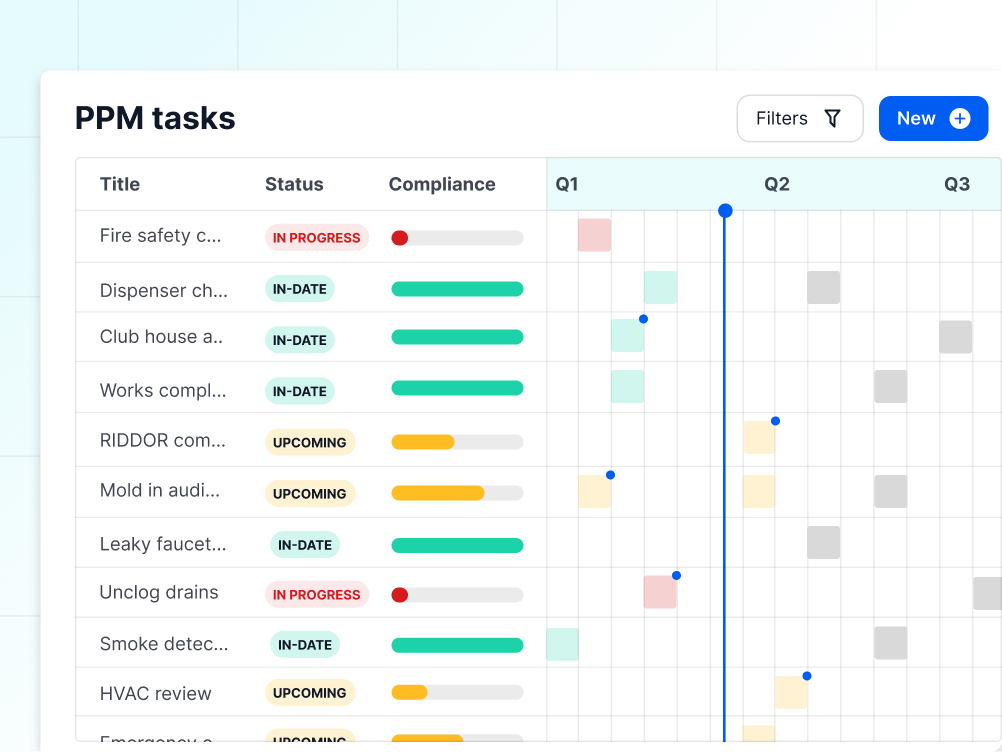
The platform’s standout feature is its "Picture-Based Reporting," which allows anyone to report a fault in seconds by scanning a QR code, no login required.
For managers, the dashboard perfectly balances reactive ticket management with robust planned preventative maintenance (PPM) scheduling. If you want a modern, mobile-first solution that your team will pick up immediately, FaultFixers is the clear winner.
Key Features:
Best for: Frontline teams who need procedure digitization.
MaintainX is a mobile-first platform that focuses heavily on digitizing paper checklists and standard operating procedures (SOPs). It feels a lot like a team messaging app combined with a work order system. It is excellent for safety audits and ensuring technicians follow exact steps during a repair, though some users find the reporting features less deep than enterprise alternatives.
Best for: Asset-intensive maintenance teams.
UpKeep is another strong mobile-first contender that focuses primarily on asset management and maintenance reliability. It is particularly popular in the manufacturing and industrial sectors but works well for general facilities too. It offers good tools for tracking asset depreciation and warranty information, making it a solid choice if your primary focus is extending the life of expensive machinery.
Best for: Schools and community facilities.
FMX (Facilities Management eXpress) was born out of the education sector and is tailored towards schools, universities, and community centers. Its strength lies in combining facility maintenance with "event scheduling," allowing users to book rooms (like a gymnasium) while simultaneously alerting the cleaning crew. It’s user-friendly but can feel limited for complex commercial real estate portfolios.
Best for: Large enterprise and complex industrial operations.
IBM Maximo is the "heavy hitter" of the group. It is an enterprise-grade platform that uses AI and IoT (Internet of Things) data to predict when equipment will fail. It is incredibly powerful but comes with a steep learning curve and a high price tag. It is best suited for massive organizations managing airports, power plants, or global infrastructure rather than standard office buildings.
Best for: Integrated Workplace Management System (IWMS) capabilities.
Planon goes beyond just maintenance to cover "Smart Workplace" features. It includes modules for real estate portfolio management, space booking, and sustainability reporting. If your role involves managing leases, analyzing carbon footprints, and fixing broken lights, Planon offers a unified (albeit complex) suite to handle it all.
Best for: Reliability-centered maintenance.
Owned by Fluke, eMaint is deeply rooted in hardware and condition monitoring. It is a fantastic choice if you want to connect your software directly to your hardware sensors (like vibration or temperature monitors). It allows for "condition-based maintenance" automatically triggering a work order only when a machine actually needs it, rather than just on a calendar schedule.
Best for: Managing third-party contractors across many locations.
If you outsource 100% of your maintenance to external vendors (common in retail and restaurant chains), ServiceChannel is the industry standard. It creates a marketplace-like environment where you can source contractors, dispatch jobs to them, and pay their invoices all within the platform. It is less about "doing the work" and more about "managing the people who do the work."
Best for: Small to mid-sized businesses needing simplicity.
Hippo CMMS is known for its graphical interface. Instead of lists, it often uses interactive floor plans where you can click on a room to see its assets and issues. It is a great entry-level tool for smaller organizations that want to move away from spreadsheets without getting overwhelmed by enterprise features.
Best for: calculating maintenance ROI.
Limble positions itself as a modern, easy-to-use CMMS that helps maintenance managers prove their worth. It has built-in features to track "Mean Time to Repair" (MTTR) and other KPIs automatically. It’s a solid all-rounder that balances usability with good data reporting, helping you justify your budget to leadership.
Best for: Property management integration.
MRI Software is a giant in the real estate world. MRI Evolution is their CAFM solution that integrates tightly with their property management and accounting tools. It is ideal for property management companies that need their helpdesk to talk seamlessly to their billing and lease systems.
Ready to buy? Each facility management system will have different features and functionality, but we recommend you prioritize a platform with these features at a minimum:
A lot of facility management software claims similar features, and at a basic level, many of them are the same.
But when you choose a CAFM solution, it shouldn’t just be another tool for logging tickets. It should be a complete operations platform that enables you and your maintenance team to ensure your buildings run smoothly, with less administrative effort.
This means you need a platform that continues to grow, expand, and adapt as your estate does. The last thing you need is to hit a complexity ceiling just when you’re getting your maintenance backlog under control.
FaultFixers is built for ambitious teams, which means it can support your facility operations from the beginning when you’re managing a single building all the way through to managing a multi-site national portfolio.
With FaultFixers, it’s not just about closing more work orders. Instead, FaultFixers focuses on how you can connect and leverage every aspect of your team, assets, and compliance data to ensure the right maintenance is done. Stop just fixing things, and start building a better environment.