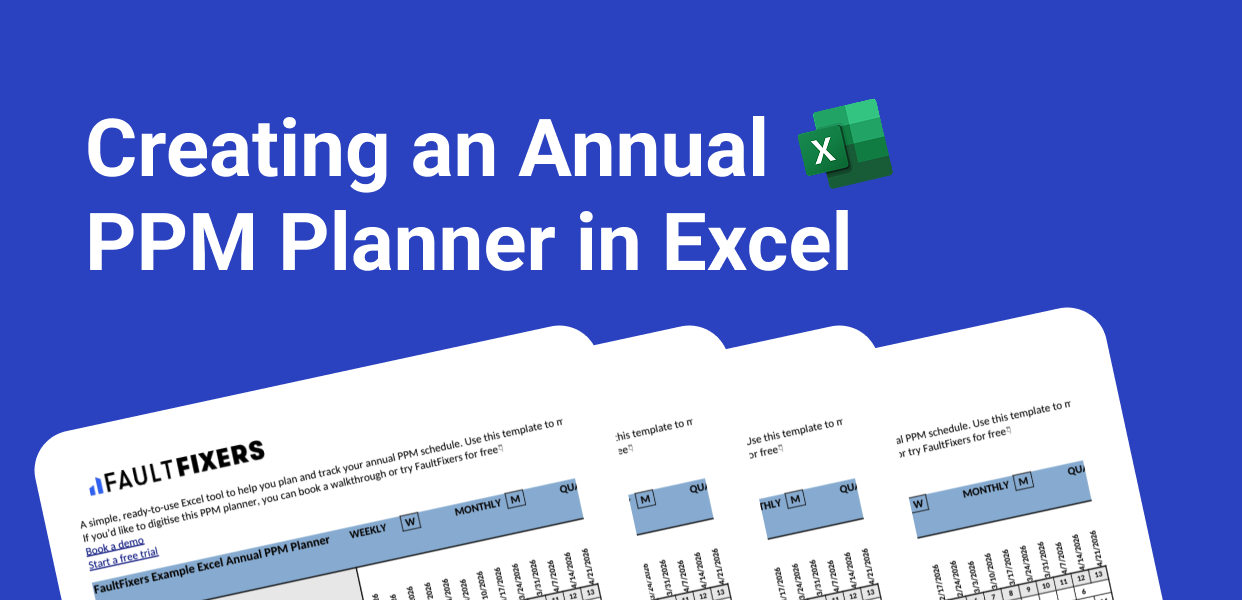
.png)
Planned preventive maintenance, usually shortened to PPM, helps facilities teams maintain buildings and assets before problems occur.
Rather than waiting for something to break, maintenance is planned in advance based on factors such as manufacturer guidance, asset condition, usage, risk and relevant requirements.
Here are 10 common questions about PPM and how to manage it effectively.
Planned preventive maintenance is maintenance that is scheduled in advance to help keep assets, equipment and facilities in suitable working condition.
PPM tasks can include inspections, testing, servicing, cleaning and replacing components at planned intervals.
For example, a facilities team might schedule an air-conditioning unit for regular servicing rather than waiting for it to develop a fault.
The aim is to manage maintenance proactively and identify potential problems before they become more disruptive.
The main difference is when the maintenance happens.
Most facilities teams need both. Not every failure can be prevented, but a good PPM programme can reduce reliance on purely reactive maintenance.
PPM gives facilities teams a structured way to manage recurring maintenance rather than relying on memory, spreadsheets or last-minute reminders.
It can help teams:
It can also give facilities managers a clearer picture of the condition and maintenance history of their assets.
A useful PPM schedule should clearly show what needs doing, when it needs doing and who is responsible.
For each task, consider recording:
Keeping this information consistent makes the schedule easier to manage and review.
There is no single PPM frequency that works for every asset.
The appropriate frequency can depend on:
Facilities teams should establish appropriate maintenance requirements for each asset rather than automatically applying the same monthly, quarterly or annual schedule to everything.
Start with the assets and maintenance requirements you already have.
A simple process is:
The quality of the information matters. Automating an inaccurate maintenance schedule will not make it a good one.
Responsibility depends on the organisation and the type of maintenance involved.
PPM may be managed or completed by:
Some organisations use a combination of internal teams and external contractors.
What matters is clear ownership. Each planned task should have someone responsible for making sure it is completed and properly recorded.
One useful measure is PPM completion or compliance, which looks at how much scheduled maintenance has been completed as required.
However, a single percentage rarely tells the whole story.
Facilities teams should also consider:
The goal is not simply to complete as many tasks as possible. It is to make sure the right maintenance is happening at the right time. There are multiple KPIs that you can track to ensure you are on the right track to being fully compliant.
Yes. Excel can work well for a simple PPM schedule, particularly when there are relatively few assets, sites and people involved.
It can become harder to manage when the operation grows.
For example, you may need multiple people to update the schedule, recurring tasks become more complex, or facilities managers need a quick view of upcoming and overdue work.
At that point, dedicated facilities management software can provide a more structured way to manage PPM.
Related: Facilities Management Software: 15 Questions Answered
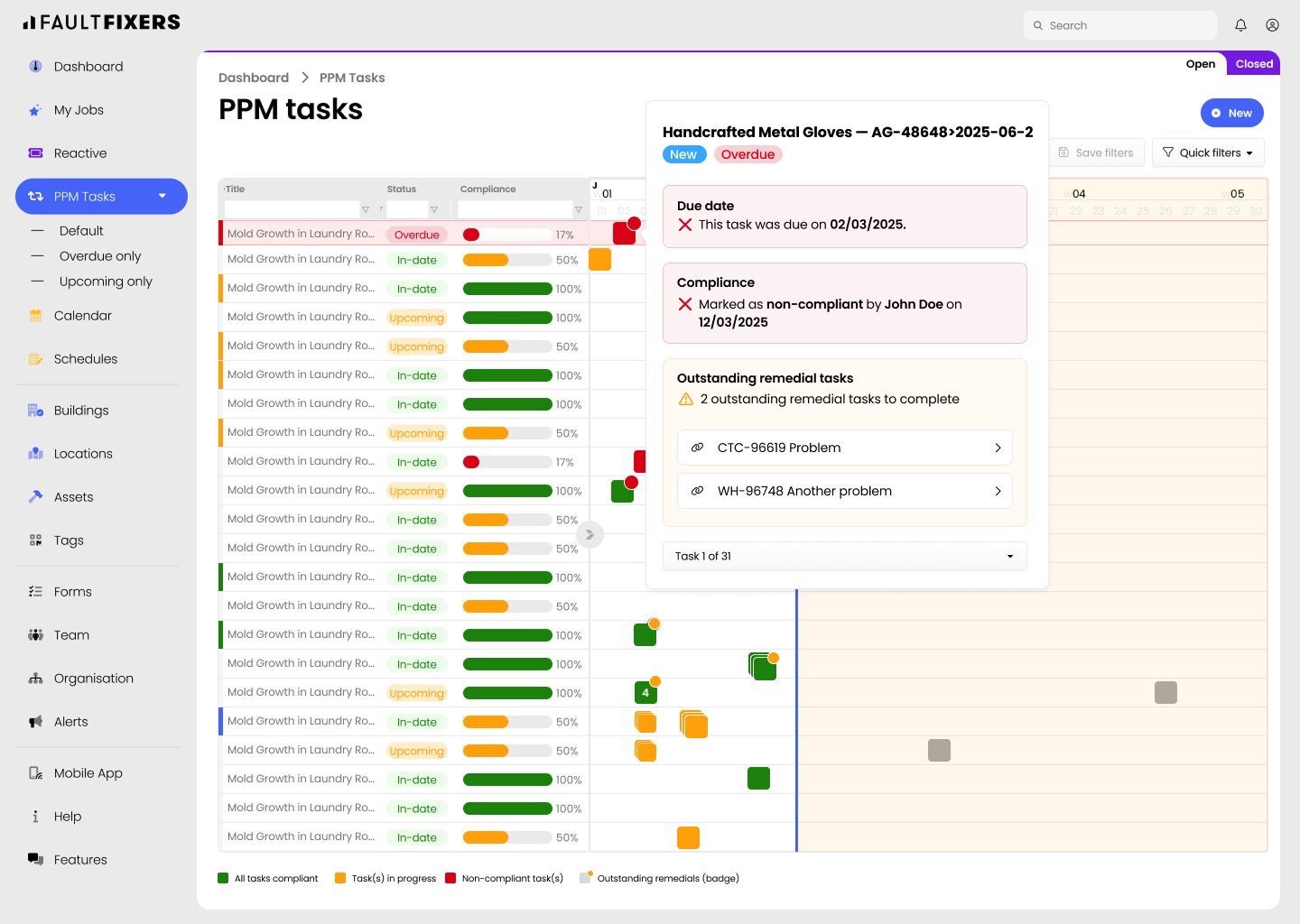
Facilities management software can bring your PPM schedule, assets and maintenance records into one place.
Instead of manually checking a spreadsheet for upcoming dates, teams can create recurring maintenance tasks and see what work is upcoming, completed or overdue.
Completed work can also be connected to the relevant asset, creating a useful maintenance history over time.
FaultFixers helps facilities teams manage planned preventive maintenance alongside reactive maintenance, work orders and assets across single or multiple sites.
If you're looking to move your PPM schedule away from spreadsheets and manual processes, you can try FaultFixers for free or book a demo.

.png)