With updated fire door guidance in 2026 and further changes to fire resistance classifications approaching in 2029, facilities managers, building owners and estates teams have an opportunity to review how they manage fire door inspections, maintenance and compliance records.
Fire doors are an essential part of building safety, helping to prevent the spread of fire and smoke while protecting escape routes. However, managing inspections, identifying defects, coordinating remedial work and maintaining accurate records can be challenging, particularly across multiple properties.
So, what exactly is changing, and how can facilities managers prepare?
From 2 September 2029, amendments to Approved Document B (Fire Safety) in England are scheduled to remove references to the BS 476 national classification system for fire resistance.
The updated guidance will instead use European fire resistance classifications under standards such as BS EN 13501-2, supported by relevant testing standards including BS EN 1634-1.
Traditionally, many fire doors have been classified as FD30 or FD60 under British Standards. European classifications use terminology such as E30 and EI30, depending on the performance demonstrated.
These classifications are not automatically interchangeable. New fire door specifications should therefore be supported by appropriate testing and classification evidence.
Importantly, the 2029 changes do not introduce a blanket requirement to replace existing fire doors. Existing doors may remain suitable where they continue to meet the building's fire safety requirements and are maintained appropriately.
The changes also include transitional arrangements for qualifying building work. Facilities managers planning refurbishments or replacements should check which requirements apply to their projects.
For existing buildings, the immediate priority remains understanding the condition, location and maintenance history of fire doors.
Alongside the upcoming 2029 changes, BS 8214:2026 provides updated industry guidance for fire-resisting and smoke control doors.
Published in March 2026, the revised standard replaces BS 8214:2016 and expands its scope beyond timber doors to include steel, aluminium and composite fire door assemblies.
It also updates guidance relating to installation, maintenance and smoke control, helping organisations understand how fire doors should be managed to maintain their intended performance.
For facilities managers, the practical implications include reviewing:
It is important to distinguish British Standards from legislation. BS 8214:2026 is industry guidance, not a new law requiring existing fire doors to be replaced.
However, the updated standard provides an opportunity to review current maintenance practices and identify where improvements may be needed.
Managing fire door compliance involves more than completing inspections. Facilities managers must also ensure that defects are addressed and maintenance records remain accurate and accessible.
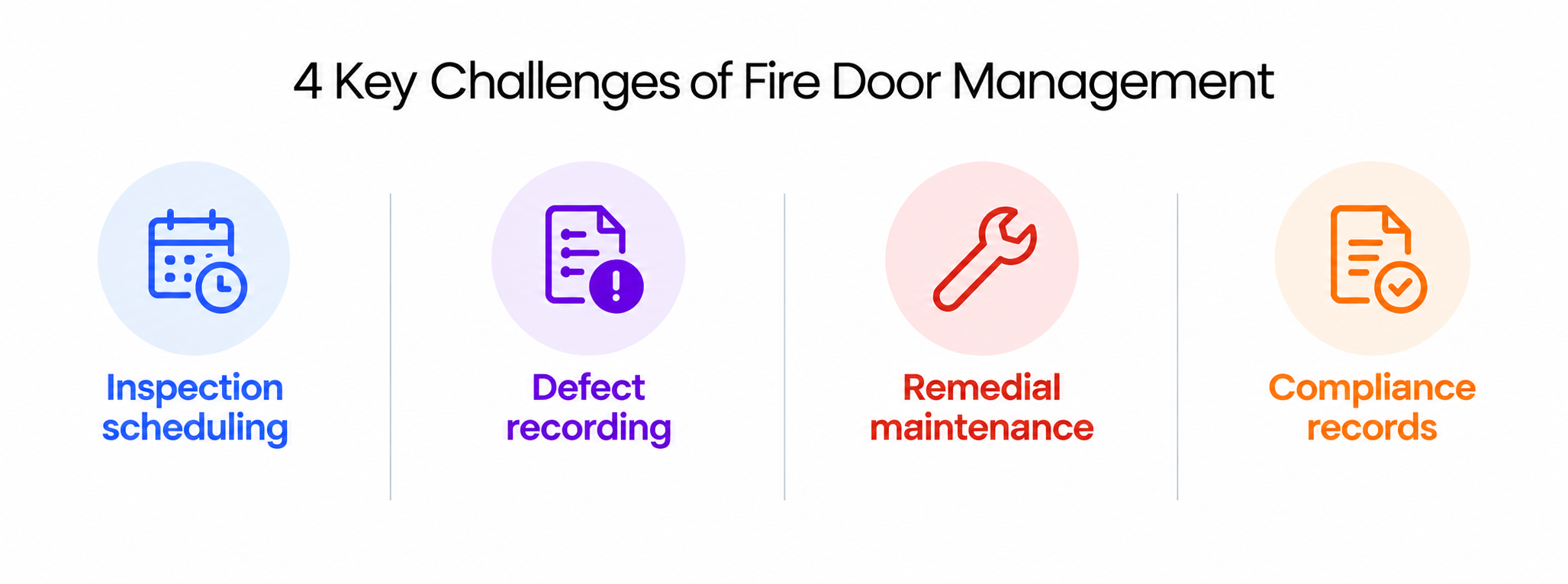
Managing inspection schedules across numerous fire doors can be difficult, especially when records are maintained through spreadsheets or separate systems. This can make it harder to identify overdue inspections and maintain consistent records.
Common defects include faulty door closers, damaged seals, excessive gaps and damaged frames. Once identified, these issues need to be recorded, assessed and assigned for appropriate remedial action.
Without a structured process, maintenance tasks can be delayed or overlooked.
Inspection reports, photographs, contractor documentation and evidence of completed work may be needed to demonstrate how fire safety risks are being managed.
When this information is stored across different locations, retrieving it can become time-consuming.
A centralised fire door asset register can help address these challenges by allowing each fire door to be managed as an individual asset.
A useful register may include:
For organisations managing multiple buildings, this provides a clearer overview of fire door condition, outstanding work and maintenance activity across their property portfolio.
Although the changes to Approved Document B are scheduled for September 2029, organisations can take practical steps now to improve their fire door management processes.
Establish whether you have a complete and accurate record of fire doors across your buildings, including their locations, condition and available certification information.
Ensure inspection schedules reflect applicable legal duties, the building's fire risk assessment, door condition, usage and relevant maintenance guidance.
Introduce a consistent process for recording defects, assigning maintenance tasks and monitoring work through to completion.
Keep inspection reports, maintenance histories, photographs and contractor records organised and accessible, ideally linked to individual fire door assets.
When preparing refurbishment budgets or replacement programmes, consider the upcoming classification changes. Ensure new fire doors are appropriately specified and supported by relevant performance evidence.
Taking these steps can help facilities managers strengthen existing maintenance arrangements while preparing for future requirements.
Managing fire door maintenance shouldn't mean chasing spreadsheets, searching through emails or struggling to locate inspection records.
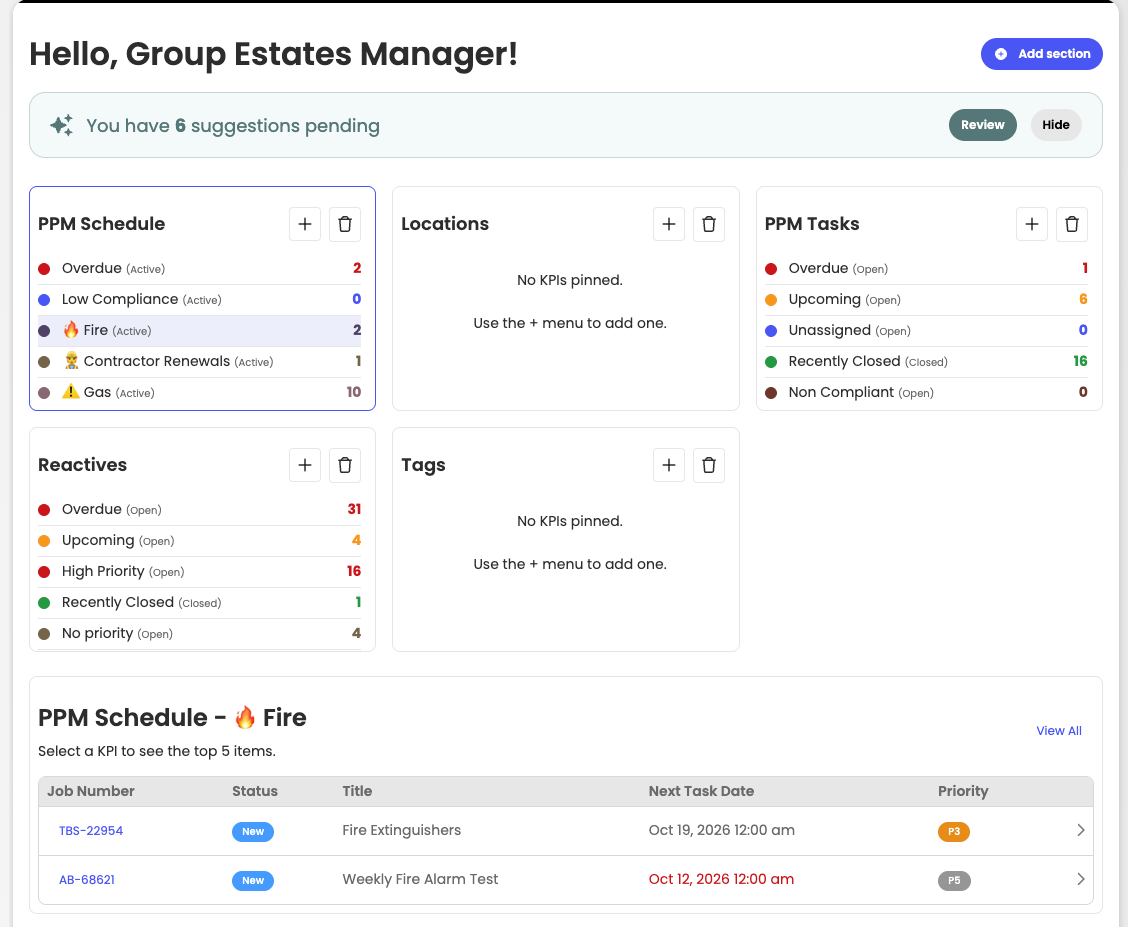
With FaultFixers, teams can:
By connecting inspections, defects and remedial maintenance tasks, FaultFixers helps teams maintain clearer records and stay on top of outstanding work.
Whether managing a single building or a large property portfolio, having this information in one place can simplify day-to-day fire door maintenance management.
Software supports maintenance coordination and record-keeping, but appropriate fire risk assessments, competent inspections and effective remedial work remain essential to achieving compliance.
No. The changes to Approved Document B do not automatically require existing FD30 fire doors to be replaced. Their continued suitability depends on their condition, required performance and the building's fire safety arrangements.
Inspection requirements depend on the building type and applicable legislation. In England, specific quarterly checks of communal fire doors and annual checks, on a best-endeavours basis, of flat entrance fire doors apply to multi-occupied residential buildings over 11 metres in height. Other premises should establish appropriate inspection arrangements based on their fire risk assessments, legal responsibilities and relevant guidance.
No. Software can support inspection scheduling, maintenance tracking and documentation, but compliance also depends on appropriate fire safety arrangements, competent inspections and effective remedial work.